
How to Make Tonic Water from Scratch, Part II
This recipe was updated on 7/4/24. You should note that the effects of drinking quinine, an ingredient found in all tonic water, is subject to debate in medical circles – read about it here or elsewhere before you decide to make your tonic. I’m not a doctor but I will point out that if you drink enough gin & tonics to make you sick, you have far bigger problems than the quinine alone will cause.
Part II You’ll find part I of this saga here.
The next day I woke with new energy and determination, and fairly bounded into the kitchen, wondering if I had enough ingredients for a second batch of tonic. My socks stuck firmly to the floor with every step, a footprint of fuzz left behind. Undaunted, I forged ahead. You’d think I would have learned the first time, but then I am a fairly typical male. Soon the syrup was made and I added the ingredients. Once again, I propped the sieve handles on old spice bottles (I’m not a complete idiot, so I pushed the bottles way back from the edge of the counter) and went back to cleaning the floor for the tenth time. This time it was the mop handle that knocked everything over. At about the same time, someone came to the door. I’d completely forgotten building maintenance was coming to inspect the patio door seals. Here I was, standing in my boxers, bed-head, with funnels, beakers, and flasks of acrid brown fluid dripping away, a pool of the same expanding across the floor, a strange sweet, chemical smell filling the air. I could tell by the look on their faces that they thought I was running a drug lab – Breaking Bad come to life.
Sometime during the futile scrubbing process to get the spilled syrup off my floor, a poem by Edgar Allan Poe started running through my head – The Raven. I hadn’t heard it since college, but the words came flashing back, and as I scrubbed, anger building, the phrases running over and over, I modified it in my mind. Of course, you want an excerpt:
Once upon a midnight dreary, while I pondered weak and weary,
Over many a quaint and curious volume of foodie lore—
While I nodded, nearly napping, suddenly there came a tapping
As of some one gently rapping, rapping at my chamber door.
‘Tis some visitor,’ Food Dude muttered, ‘tapping at my chamber door –
Only this and nothing more.’But the fact is I was napping, and so gently you came rapping,
And so faintly Amazon.com came tapping, tapping at my chamber door,
That I scarce was sure I heard you”—here I opened wide the door;—
Darkness there and nothing more.Deep into that darkness peering, long I stood there wondering, fearing
Doubting, dreaming dreams no cook ever dared to dream before;
But the silence was unbroken, and the stillness gave no token
Plastic bag of quinine broken, just beside my hallway door.
Spilling dust upon my carpet, on my musty hallway floor,
Merely this and nothing more.Back to my condo turning, all my soul within me burning,
Soon I heard my Tanquery calling somewhat louder than before.
‘Surely,’ said I, ‘surely few ingredients pose no challenge;
Let me see then, what we have here and this recipe explore –
Let my heart be still a moment and this recipe explore; –
Six ingredients, and nothing more!’Hours later, muscles crying, filters filtering, fines undying,
Sticky counters pulling, quinine in my kitchen drawer.
As I stood there emptying cones, feeling pain within my bones,
Patience flagging, body sagging, reading tonic lore,
Fatigue I could ignore no more, recipe no guarantor
All this trouble, nothing more.At that moment, mind a-napping, arms so weary, elbows flapping
On the counter, sweet and lovely; sticky tonic poured.
As I stood there, locked in fear, grasping all the tonic near,
And the only word there spoken was the whispered word, ‘tonic’?
This I whispered, and an echo murmured back the word, ‘tonic!’
Merely this and nothing more.And my tonic, always filtering, still is dripping, ever filtering
On the tiny space it’s dripping just above my oven door;
And its sugar tendrils reaching like a demon, always reaching,
And the oven-light o’er streaming throws its shadow on the floor;
And my floor from out that syrup that lies floating by the door –
Shall be sticky – evermore.
[With apologies to the spirit of Poe]
I finally finished the tonic. Filtering took two days, but when it was finally complete, it poured like beautiful thin honey. The gin and tonics were wonderful and friends raved. Was it worth it? It took almost a week before I stopped sticking to things in the kitchen. Despite my bitter feelings for my bitter tonic, I’ve made it many more times.
This is based on Portland bartender Kevin Ludwig’s recipe in the April 2007 issue of Imbibe Magazine:
Equipment:
- 2 quart pan
- Wide mesh strainer
- Something to catch the filtered liquid (needs to be able to take a bit of heat)
- Zester (I use a microplane)
- Ultra fine cotton cheesecloth
- Knife
Ingredients:
- 4 cups of water
- 3 cups pure cane sugar
- 2 ½ Tbsp quinine (powdered cinchona bark) (Amazon.com)
- 6 Tbsp. powdered citric acid – check bulk bins at grocery stores
- 3 limes – zested and juiced
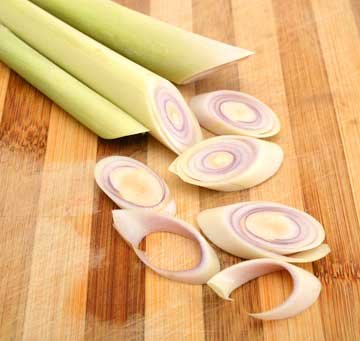
- 3 stalks lemongrass, roughly chopped
- ¼ teaspoon kosher salt
Experiment with a combination of flavors that work for you, but don’t go overboard. Let the gin do the talking. Some recipes call for allspice and sometimes I throw in orange zest or whatever catches my eye.
Recipe:
Make a simple syrup by bringing the sugar and water to a boil, and stirring until the sugar dissolves. Turn the heat to low – see note #1 below.
Add quinine, citric acid, lemongrass, lime zest and juice. Stir and simmer for 25 minutes.
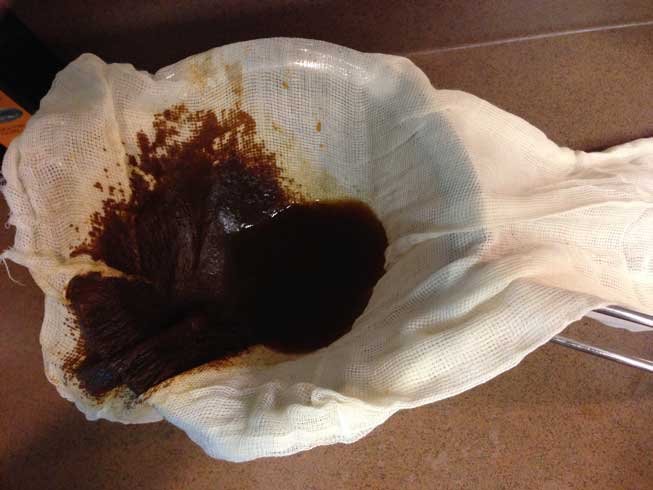
Remove from heat. Only let the mixture cool enough so that you can work with it, as it is much more difficult to filter once it reaches room temperature and the sugar thickens.
Do a quick pass through a mesh strainer to remove the large solids. Then, drape a double thick layer of fine cheesecloth over your strainer – keep it long, and let it trail across the counter. Place the strainer over a bowl and begin filtering by pouring the mixture through the cheesecloth. Be patient; each pass takes a good 30 minutes. I keep the bowl over very low heat to be sure the tonic stays warm.
As the fines plug the cheesecloth, carefully move it across your strainer and up the other side. You may need to adjust it several times during the filtration process. Repeat the process two more times, or until most of the solids are removed.
You can try your tonic now – use the recipe below, but it will be best if you let the mix settle out for a couple of days in the refrigerator, and carefully pour the lighter-colored liquid off of the top. In my experience, letting the mix ‘mellow’ for a few days smooths out the rough edges, and greatly improves the final product.
Pour your tonic into clean glass bottles, cover them, and store them in the refrigerator. It will last at least two weeks. If you add a shot of bourbon or vodka to the mix it will help preserve your tonic – I’ve kept it for a few months.
To make the cocktail, I use the following proportions:
- ½ oz. tonic syrup
- 1-½ oz. gin
- Splash of soda water
- Ice cubes
- Glass: double rocks
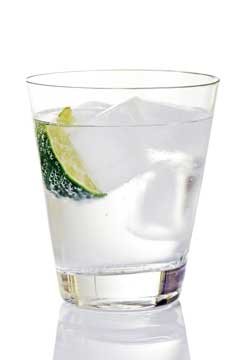
- Garnish: lime twist, or drop the lime wedge in the drink
A comment about soda water: You’d think commercial soda would be relatively chemical-free, but it’s not – they all contain preservatives. Get yourself a soda siphon and make it yourself. It’s easy – there are many available on Amazon or from gourmet stores such as Sur la Table. You’ll taste a difference. I’m not a big fan of the Soda Stream as it tends to under-carbonate.
I’ve now made the tonic at least a dozen times – when friends taste it, I end up giving them the bottle and have to make it again. Each time I look for shortcuts, many of which are mentioned in the comments below.
1. With a bit of testing, it became obvious that the simple syrup mixed with quinine bark is what slows the filtering. Following suggestions from several people, I tried a concentrate of the herbal ingredients without the sugar, filtered it separately, and then added it to the simple syrup. This worked well and cut the entire process to an hour, but I found the tonic didn’t stay in suspension as well as it should – I had to keep stirring the drink, which watered it down. It also left a bit of an edge and a “dusty” note, which didn’t mellow over time. Being a purist, this was unacceptable.
Kevin Ludwig, author of the original recipe, suggested that I let the mixture settle out for five days or so before filtering. Most of the sediment settles into a gluey mass at the bottom of the jar. If you pour it off carefully and then do the filtering, it is much easier. The tonic also mellows a bit during the process. This is a pretty good solution, though the final filtering is still a bit of a pain. Since I need instant gratification, waiting five days for a drink doesn’t fit my agenda.
In my humble opinion, this tonic is lousy when paired with vodka. Save it for a good gin. The NY Times ran an article comparing gins called “No, Really, It Was Tough: 4 People, 80 Martinis“. Plymouth English Gin won, but I think it would be a bit too smooth to stand against the tonic
If you try to make the tonic, I’d love to hear how it goes. If you’d like to compare, I have also posted our ratings of commercial tonic waters which you can read here.
Lynn D. says
This is hilarious. It reminds me of James Villas’ “I Made my own Wine” in a collection caled American Taste, except that his finished product did not turn out so well.
suds sister says
Great story, Dude! Could you please send me the shortcuts?
Roger says
I enjoyed the story. Nothing you said discouraged me from wanting to try it. Send me your shortcuts and I’ll try it.
Jeff says
So… did the cops ever show up to find out what you were doing?
AspiringFoodie says
Food Dude. Long time lurker, first time poster. And you don’t even have to put this on the site if you don’t want. Just have to say I’ve always loved your reviews, but this little tale — and poem! — has earned you a fan club member. You can certainly turn a phrase and I write for a living so I should know Just wanted to say so.
Food Dude says
I’ll write up my shortcuts and whatnot this weekend and post here in the comments. Have actually gotten it down to two hours, though it doesn’t stay in suspension quite as well as the original recipe. I say, give them a swizzle stick! (does anyone use swizzle sticks anymore?)
Jeff, I gave the concierge a bottle of tonic. Issue vanished.
Sir Loins says
I use swizzle sticks! – a lot, actually, and not just for booze. As a matter of fact, I got some really cool old glass ones at a thrift store back when the lounge/swing revival hit the skids.
I am really looking forward to the tonic recipe and shortcuts. I made a huge batch of some ridiculously involved liqueur from all these exotic fruits and spices once. ‘Bout time I made a big, sticky mess in the kitchen again.
kevinludwig says
Instead of filtering immeadiately after cooking, I find it best to pour the whole mess into a wide bottomed jar (like an old marachino cherry jar) and stick it in the fridge for a day or two. The bark will settle out and solidify in the bottom of the jar and then just running it through a plain old metal strainer will get rid of any chunks. It also gains a little more flavor from the increased steeping.
Andy Schmitt says
I was just going to suggest that myself….good job Kevin.. :)
LadyConcierge says
Wow, from the mouth of the master himself!
Food Dude, I wish you lived in my building. A bottle of homemade tonic makes lots go away! Thinking about moving to the Meriwether anytime soon?
Jeffrey Morgenthaler says
Here’s a little hint for you, Dude! Dont add the sugar in the first step as the recipe states. Boil the 4 cups of water with your ingredients, then strain. Things will go a lot faster this way, and all you have to do in the last step is reheat the liquid and add the sugar.
Great poem, by the way…
Cheers!
KT says
Food Dude, you are a hilarious and talented writer. Thanks for sharing!
mr. stripey says
so, i hear that patience is a virtue, but FOODDUDE, i need shortcuts. what’s the secret to the easy (er) recipe for tonic water?
thanks a million, in advance.
Food Dude says
Mr. Stripey: see this post: https://portlandfoodanddrink.com/?p=960
triq says
Food Dude…and/or Mr. Ludwig…
could I get the actual recipe to attempt my own descent??
I live on the east coast, so I don’t have access to the magazine or article!
diesel says
Nice story bro. quite humorous. Would like the shorcut if you don’t mind. thanks
diesel
Food Dude says
Thanks. Feel free.
DAVE says
Hi .Just read your attempts at making Tonic and have to say I really enjoyed
it.Thank you for making a dull day a smiling one(and odd belly laugh when imagination in gear at visions of all the sieves et),
Please would you send me any shotcuts you found.
Thanks again
Alanna says
Hi Food Dude!
First of all, um, I love you.
Ok, with that out of the way, I just published a recipe (based on yours) for tonic on my blog. I had some lemon balm from my CSA, so I threw that in as well. Yum! This stuff rocks. Maybe you’re on this already, but I found pieces of cinchona bark, rather than powder, at a shop here in San Francisco. No tricky straining required! Thanks a million for this article – it has been extremely helpful!
Food Dude says
Well… um… blush. I think everyone should click on the bojongourmet.com link.
Thanks for the tip!
Alanna says
Aw! Here’s the direct link to the post:
http://www.bojongourmet.com/2010/07/tonic-water.html
Cheers!
Plymouth says
I found the same Imbibe article and tried my hand at tonic syrup for the first time a few months ago. I found cinchona bark at an herb and spice shop in the mission in San Francisco and fortunately managed to buy just a couple of ounces (enough for maybe 3 batches). It was, however, in whole chunks not powder so I had to grind it in my spice grinder. The chunks kept catching in the blades but eventually I got it fairly well powdered.
I found that 6 tbsp of citric acid was WAY WAY WAY too much. It was mouth-puckeringly sour. I added more sugar syrup, which made it drinkable but diluted the quinine flavor too much. We managed to drink our way through it, but it wasn’t pleasant – half the time I was mixing it with Schweppes tonic to make it tolerable. The second batch I made I used ONE tablespoon of Cirtic acid and that was about right & finally made it feel like it was worth the effort.
I still have half of it in my freezer waiting to be filtered because, yes, the filtration process is incredibly arduous. I discovered that the best way is actually to use the giant cafeteria size filters in a flat-bottomed steamer, which maximizes the surface area of the filter to absorb particles. Still takes a bloody long time though!
PDX Food Dude says
I am wondering if it might have been so sour because you had to grind it yourself. Tonic is supposed to be sour, but not that sour, and I’ve never had a problem with mine. You might try mail ordering some next time.
Thanks for the tip on the filtration!
Naomi says
I laughed so hard! I had just found the same recipe you mentioned and was mulling over how hard it could be. When I read your article, I couldn’t stop laughing because I would have done the same exact thing! Thank you for saving me the humiliation of trying to explain sticky floors to my roommate!
PDX Food Dude says
Thanks Naomi!
Peter Roscoe says
“It Must Have Been Something I Drank!” lol….great story..reminiscent of Jeffrey whatever his name is’s books from a few years back. The end result sounds great, but the getting there is all the fun, especially when it goes a little wrong.
PDX Food Dude says
To this day I laugh every time I think about this whole adventure… and I still make tonic a few times every year
Susan says
I’m Kevin’s mom. He encourages me to make this concoction but I’m waiting for a six pack to arrive in the mail! Maybe this Christmas. Happy Thanksgiving Food Dude. I always enjoy your stories!
Dash says
Great stuff…..can anyone recommend where I can order quinine……preferably less than a pound?!
PDX Food Dude says
It is available on the internet from Raintreee. I’ve also seen it at a spice shop in Sellwood. There are several shops, but I think “Stone Cottage” at 8609 SE 17th Ave has it by the scoop. Call first to make sure I’ve got the correct store.
Dash says
No luck with Sellwood. What is raintree?
PDX Food Dude says
Looks like Raintreee doesn’t carry it anymore. Stone Cottage had it about two months ago. I’d just try an internet search for quinine or Cinchona powder
Brian says
I passed through San Fran recently and picked up one precious ounce of cinchona bark. Grinding it up in my bullet and made my syrup in about 45 min just now – filtered through varying sizes of mesh filters and ended with a pass through my aero press coffee contraption. Worked perfectly! I’m canning a couple of jars to see how aging will affect it.
Charlie says
I have filtered the liquid several times through double layer cheesecloth and then through coffee filters. All of the particles are gone but no matter how many times I filter, the liquid is still brown. You state that the liquid is clear and the picture in the article has clear liquid as well. What am I doing wrong?
PDX Food Dude says
You haven’t done anything wrong, and I’ve updated the article to reflect that. The final mixture will have a brownish hue, and that tonic photo is a stock image. Sorry about the confusion!
G. Hewitt says
I found that by putting the powdered c. bark in empty fold over type tea bags (bought from Amazon) and then putting those inside the round small metal mesh tea bag “thing-ees” that can be suspended in the cooking mixture significantly helped reduce (but not eliminate) the after filtering problems/steps. I ran my cooked ingredients thru cheesecloth and coffee filters and still a bit slow (but without the sugar included) went easily and in end added simple agva syrup and reheated to combine and refrigerated thereafter for a day to let it settle more. One last thing – I used rubber bands to keep the coffee filters wrapped around narrow heat proof tumblers to accept the pour and not cave in on themselves.
david king says
Funny story but the recipe sounds crazy.
If you are going to stain stuff through a filter why add all the other gunk and sugar. Boil the bark and strain that. I wouldn’t boil the peel either as it ruins the flavor. If you want to sanitize it use some star San or something but I wouldn’t bother frankly. I’d macerate all of it cold for a few days then add sugar. Don’t know about extraction of quinine but you could always do that separately using stream condensation if you want to get fancy. How about using an aeropress for filtering? But again why add the syrup before filtering? Madness.
Also seems like a lot of acid?
John-Christopher Ward says
I have never encountered a self conscious gin. However, there are several pretentious gins.
Michael says
This is the best tonic syrup recipe I’ve tried by far. I have simplified the recipe further though. I make an extract using cinchona bark powder and Everclear, 1 gram of cinchona bark powder per 25ml Everclear. Let sit overnight and agitating periodically. Strain the extract through fine cheese cloth then a coffee filter. I usually mix 8.5 ounces/250ml of Everclear with 10 grams cinchona powder. Some extract will be lost when filtering, but this leaves me with enough extract to do to batches.
I make the botanical tea as described in the recipe, strain it through fine mesh, then add 90ml cinchona bark extract, stir, and allow to sit for a day or so to let the flavors come together. This method eliminates the nightmare of trying to strain the cinchona bark powder, sugar, and botanicals. Also the alcohol in the extract increases the shelf life of the tonic syrup. Enjoy
Mr. Gunn says
I don’t know if everyone’s figured this out by now, but you can use chinchona bark chunks in the recipe. It will still flavor the tonic but doesn’t cause the filtration problem.
Mr. Gunn says
Oh, and if you find the amount of citric acid to be too much, you can neutralize it with baking soda.
Rasmus Frich says
Add the sugar after the filtration, that helps a lot.
PDX Food Dude says
Agreed