 Updated July 2024. For me, this is the time of year for a good gin & tonic, and judging by a shortage of tonic waters at the local grocery stores right now, I’m not the only one who thinks so. I thought it would be a good time to update the recipe in this article from July 2014. Don’t want to make your own? I have our ratings of commercial tonic waters which you can read here.
One cool spring evening, I spotted an article in Imbibe magazine that extolled the virtues of making tonic water from scratch. It included the much-loved recipe from Kevin Ludwig, the bartender at Park Kitchen at the time. It caught my eye as gin and tonic is my drink of choice. Six or seven ingredients. The entire process boiled down to a few pictures. How simple! What could go wrong?
You’d think after years of cooking experience, I’d know better. I was about to be reminded how many things can go wrong.
I quickly scanned the article. Assembling the ingredients was not difficult:
1. Track down a source for cinchona bark also known as quinine. Fool that I am, I ordered a pound, which will last me until the end of my days so order the smallest bag you can find. The powdered form is best, as I’ve found that grinding the bark yourself doesn’t give the same extraction, though it will work in a pinch and is faster to filter. It is hard to get locally, but you can find it on Amazon.com. If you are ecologically minded, look for a company that practices sustainable harvesting.
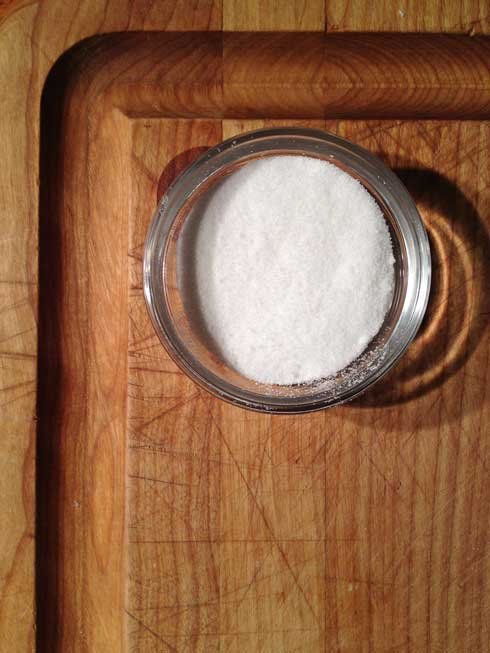
2. Next, find citric acid. I’d never noticed it in the store before, but I tracked it down in the bulk foods section at a local market. You can also find it on Amazon. I scooped some of the white powder that looked suspiciously like a street drug into a plastic bag and headed home, hoping I wouldn’t get pulled over for some minor traffic violation on the way.
3. On to the easy stuff. Lots of limes, sugar, some star anise, lemongrass… I even threw in a new box of coffee filters. When the quinine powder arrived, my mise en place would be complete!
 I’m not patient ordering things over the internet. Once the credit card is accepted, I’m looking out the window, waiting for the UPS truck to deliver the goods. How can it be, that in these days of the internet and miracle inventions, some sort of appliance in the kitchen doesn’t ding and proffer forth my quinine as soon as the credit card goes through? Anyway, after five days of waiting, I’d run out of store-bought tonic water and was grumpy.
That evening after a particularly lousy day there was a quiet rapping on my door. The dog and I looked at each other and decided it was the crazy lady down the hall, so I didn’t answer. It wasn’t until two hours later when I took him for a walk, that I nearly fell over the little cardboard box next to my door. A small amount of brown powder was spilling onto the yellow carpet.
The dog could wait a moment. I brought the dusty mess inside, and, wetting my finger, dipped it into the quinine. I put my taste buds on high alert, ready to find the subtleties as I raised it to my mouth. It was, as they say, a regrettable error. My lips involuntarily slammed shut. I wanted to wash my tongue with soap. It was horrible; a foul, acrid taste akin to waking up face down in an Irish peat bog after one too many drinks; and not in a good way.
Undaunted, I opened the box, and then a bag, and, inside that, another bag (lots of good they did), and watched as a fine brown powder rose and hung in the air before settling all over the kitchen. Interesting. I walked the dog and considered the possibilities. Yes, I could do the reasonable thing and wait until the next day, but it was only ten on a Friday night. Twenty minutes later my simple syrup was boiling away, I’d added the other ingredients and was looking forward to the famous Park Kitchen gin and tonic.
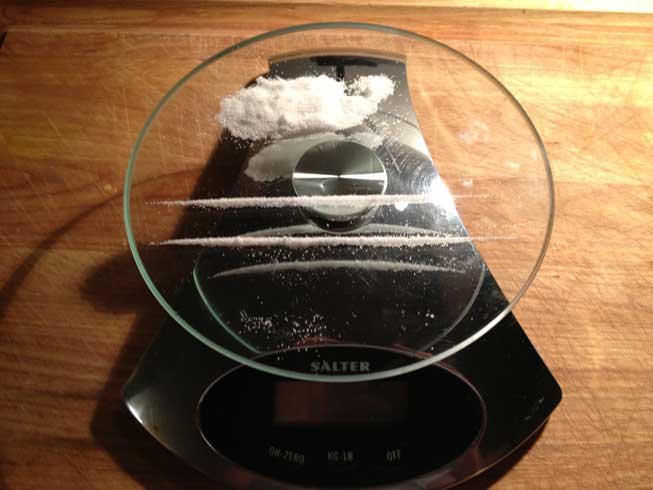
In retrospect, I now realize that I was a fool. The Imbibe article mentioned that it “can take a while to filter out the quinine” -the understatement of the year. I strained it through a sieve, then cheesecloth. Nothing changed. Set up a cone, carefully pouring the syrup into a paper filter. It started running through, coming out a beautiful honey brown. Ahaha! I cried, just before the promising stream slowed to a few drops and stopped, the filter impossibly clogged. A scant teaspoon shimmered in the measuring cup below.
I’m not easily daunted by cooking. Soon every sieve in the house was lined with a coffee filter, slowly dripping my elixir into bowls and cups. I set them all over the kitchen counter, balancing the sieve handles on spice jars to keep them from falling. With methodical precision I moved from filter to filter, emptying-replacing-emptying-replacing, always careful not to lose any of that beautiful tonic. I was a filtering machine and by one in the morning I had enough to make a drink, and, with shaking hand, raised it to my lips.
It was good, but a little harsh; perhaps a bit sweet. Would it mellow over time? It needed a stronger gin to stand up to the flavors. I was tired. My back hurt. Sanity finally regained its hold, and I decided to change the filters once more and go to bed.
That is where things really went wrong.
You know how dominoes are when you stack them all up in nice, neat little rows? Push one, and they all go with satisfying little clicks? Jury-rigged kitchen contraptions are similar. When a tired arm hits the back of a sieve propped up on a little bottle, and the resulting pull of gravity flips the filter full of syrup into the air, time suddenly slows. I flailed helplessly as four filters full of skanky, sticky, simple syrup-laden brown muck catapulted themselves to various landing spots in my kitchen. Some of the gunk ran across the counter and into that little crack between the stove and the cabinets; you know the one? Some poured to the floor and ran under the oven. One batch made a pirouette which would make a dancer proud and landed in my open kitchen gadget drawer.
Some items of note about simple syrup: on a good day, when spilled, it is hard to clean up. Add a measure of acrid brown talcum powder and some citric acid, and you have a gluey substance you could use to assemble furniture. I can’t tell you how many times I mopped the floor. I pulled out the oven and mopped some more. Rinsed all the gadgets in the drawers… and the drawers below. Like some miracle product sold on late-night TV, no matter how much I mopped and sponged, as soon as everything dried it turned sticky again. I made it to bed at 4:30 am, uncomfortable with the knowledge that I had been able to save about three ounces of tonic. Not my best kitchen performance.
Part II: Quoth the Food Dude, “Nevermore” Click here for part II and the final recipe
nancy says
I am on tenterhooks for Part II; this, from someone who’s actually tasted the magic elixir…
Hunter says
Dammit she beat me to it.
Food Dude says
See… that’s how crazy it made me!
Bubbles McGee says
You’d better have some damn good gin lined up for the next effort! Maybe you should let Dog Dude have a go at it?
503eater says
dude, i feel your pain. i’ve had a couple similar disasters in my kitchen as well, which still bears some of the scars.
maybe in your filtering method you could employ something akin to an aeropress, where you could use more than gravity, and potentially avoid any sieve-balanced-on-bottle problems:
http://aerobie.com/Products/aeropress_story.htm
good luck. looking forward to the next installment.
Food Dude says
503eater, That device still uses paper filters, so I don’t think it would work. This stuff is literally like talcum, and when you add simple syrup, would clog anything. I have found some shortcuts, which I’ll list next week.
Appreciate the idea!
JDG says
Two words: centrifuge.
Food Dude says
JDG: First thing that came into my mind too! Um, got one laying around?
Phil says
You need a Buchner Funnel to do this propa.
http://www.theartofdrink.com/blog/2006/05/buchner_funnel.php
Basically, a high-pressure pump hooked to a paper filter sieve. I’ve been wanting to try Kevin’s recipe, so email me if you want someone to take some of the chinchona off your hands.
Jeffrey Morgenthaler says
Here’s a little hint for you, Dude! Don’t add the sugar in the first step as the recipe states. Boil the 4 cups of water with your ingredients, then strain. Things will go a lot faster this way, and all you have to do in the last step is reheat the liquid and add the sugar.
Cheers!
Elle says
Oh man, I’ve been in love with the “Small Batch Gin”, since I tasted it. And I never really like Gin, that’s how good it is. Hendricks of course!
Is it really that hard to make? Kevin said a key is to let it cool before moving fwd, otherwise it’s cloudy. ???
Food Dude, did you make the tonic?
Food Dude says
Ellie, you can read the 2nd part of the story by clicking here.
Steven says
I found it a lot easier to boil each ingredient seperatly and store in pint mason jars in the refrigerator.
I boiled 15gr of cinchona in a pint of water to get 325ml
same for 10gr of lemon grass to get 325ml, and 10gr orange peel to get 325ml
Once I had them set up this way it is easy to mix up a batch.
30ml cinchona extract
15ml lemongrass extract
15ml orange extract
1tsp brown sugar
2tsp cane sugar
1/2 tsp Acid Blend (Wine making mix of malic, citric, tanic)
Ice water to make 900mL
I can now mix up a batch of tonic water and carbonate in a matter of minutes (I have CO2 and a regulator from my home brew beer days that I carbonate it with).
This lets me experiment with a lot of flavors without sacraficing a large batch of cinchona.
debby says
food dude,
I just stumbled on this after reading about homemade tonic in the Washington Post today. I am undeterred but I never did see your recipe.
Cuisine Bonne Femme says
I don’t think Food Dude included the tonic recipe as he used one from a copyrighted magazine. However, if you check comment number 14 in his post part 1 post, a reader has offered up a similar one:
Holly says
That piece about making homemade tonic water is one of the most hilarious pieces I have read. I can so relate. I love tonic water, too, and my husband is tired of going to the store to get me more. Plus it’s expensive.
But this piece reminds me of my adventures in making homemade lotions and creams. What a mess, and the house was filled with bottles and jars of all kinds of chemicals. I would be up late at night standing over some concoction in the kitchen. And none of it was any better than Pond’s Cold Cream, which I have used since high school, and I have beautiful skin.
But anyway, I might just try the tonic water recipe. Thanks for the laughs.
jon says
I think i will still try to make my own tonic water, this sounds like it could’ve been a seinfeld episode.
Ken says
Great story and most of us have had similar experiences concocting one type of brew or another. But this sure sounds like it’s worth a try because it’s nearly impossible to find good tonic water at the store.
Ryan Ralston says
I’ve run into this same problem with green tea and pretty much any other small-particle syrup. The idea is to make a tea first, without adding the sugar. The water+sugar together make the liquid too viscous to strain at all. Once you have achieved the desired level of cleanliness, add the sugar.
Food Dude says
I tried that, but liked the outcome better when done per the recipe. Of course that may have been a psychological thing – I like a challenge.
Laura J Barton says
I love G&T’s and was appalled when I learned that commercial tonic has the same amount of sugar as colas and other sodas, so had been buying diet tonic. But because I always use really good gin and fresh limes I couldn’t justify ‘ruining’ a perfect drink with all those nasty chemicals. I decided homemade tonic was the solution. I went on-line, did the research, and in addition to the Inbibe recipe found another recipe. FoodDude, reading your tonic making story, which made me laugh so hard, only reinforced what I ended up doing. Because after I read all those filtering instructions, takes a few days etc, I decided to take an alternative route: I cajoled one of my homebrewer friends into making some tonic syrup for me! He had all the equipment set up for filtering and voila, I have a supply to last for quite some time. And I’ve also found that while expensive, the organic Q Tonic made with agave and available at a few Portland liquor stores is a wonderful commercial tonic, so I have that on hand too, for those “splurge” occasions and when I don’t have sparkling water to mix with my tonic syrup.
Food Dude says
Glad you enjoyed the article. I agree about Q Tonic; you’ll find a review here: https://portlandfoodanddrink.com/2009/03/review-q-tonic/
Lisa says
I laughed as I read this. I have done similar things more often than I would like to admit. :)
wGraves says
The Buchner funnel is a good suggestion. Another is the use of a filter tube with spun glass filter element, which may be pressurized as well.
Good Luck
Another filtering trick says
A trick I just figured out: steep the cinchona bark separately. I did the following:
Steep cinchona bark in two cups of water for a fairly long time, then filter just that through coffee filters.
Steep the other ingredients (zest, lemongrass, etc.) in four cups of water for a shorter duration. This stuff can be filtered quickly with a fine mesh strainer.
Mix the two liquids together, add your sweetener (I use agave nectar), and heat until everything is well-blended.
Food Dude says
I’ll give that a try. Thanks!
Christian Pepe says
Guys guys guys, the trick is NOT to use POWDERED Cinchona Bark. Check Amazon for the “cut and sifted” label. This will save you tons of time. I’ve made liters and liters of tonic syrup for my customers who keep asking for more variations. So far the favorite is the “strawberry cardamom” variety. Anyways, trust me, use the cut and sifted stuff. If you must use powder place it into a fill-able tea pouch before heating, just don’t let the powder mix with everything else.
Joanna says
I tried making my own tonic when this article came out, and loved it! I have been drinking fevertree bitter lemon soda and decided to try making my own syrup – it turned out great, so I wanted to share.
1 lemon, scubbed clean and hacked to bits, remove pits, but leave peel
1 cup water
1 cup sugar
In a blender puree whole lemon and water. Add to a pan and simmer with sugar until sugar melts. Strain through a bag or tea towel.
That is it.
It is sweet and bitter and a little thick from the natural pectin. Great with soda water or with a little vodka.
PDX Food Dude says
Thanks for the recipe!
Tess Posthumus says
Nice article!
Tonic water is very fun to make but be careful when using cinchona bark. This bark contains the toxic quinine, which is the signature ingredient for tonic water.
I recently wrote an article on how to safely make your own homemade tonic water. If you’d like to read it or refer people who are experimenting with their own tonic water, please do. Safety first ;)
http://www.tessposthumus.com/how-to-make-tonic-water
Greets,
Tess
Therese says
Oh for heaven’s sake…did you check out the diet tonic in the store? There’s usually plenty of that. This read like a French film. Give me grace.